ServicesWater Softeners
Water Softeners in Menomonee Falls
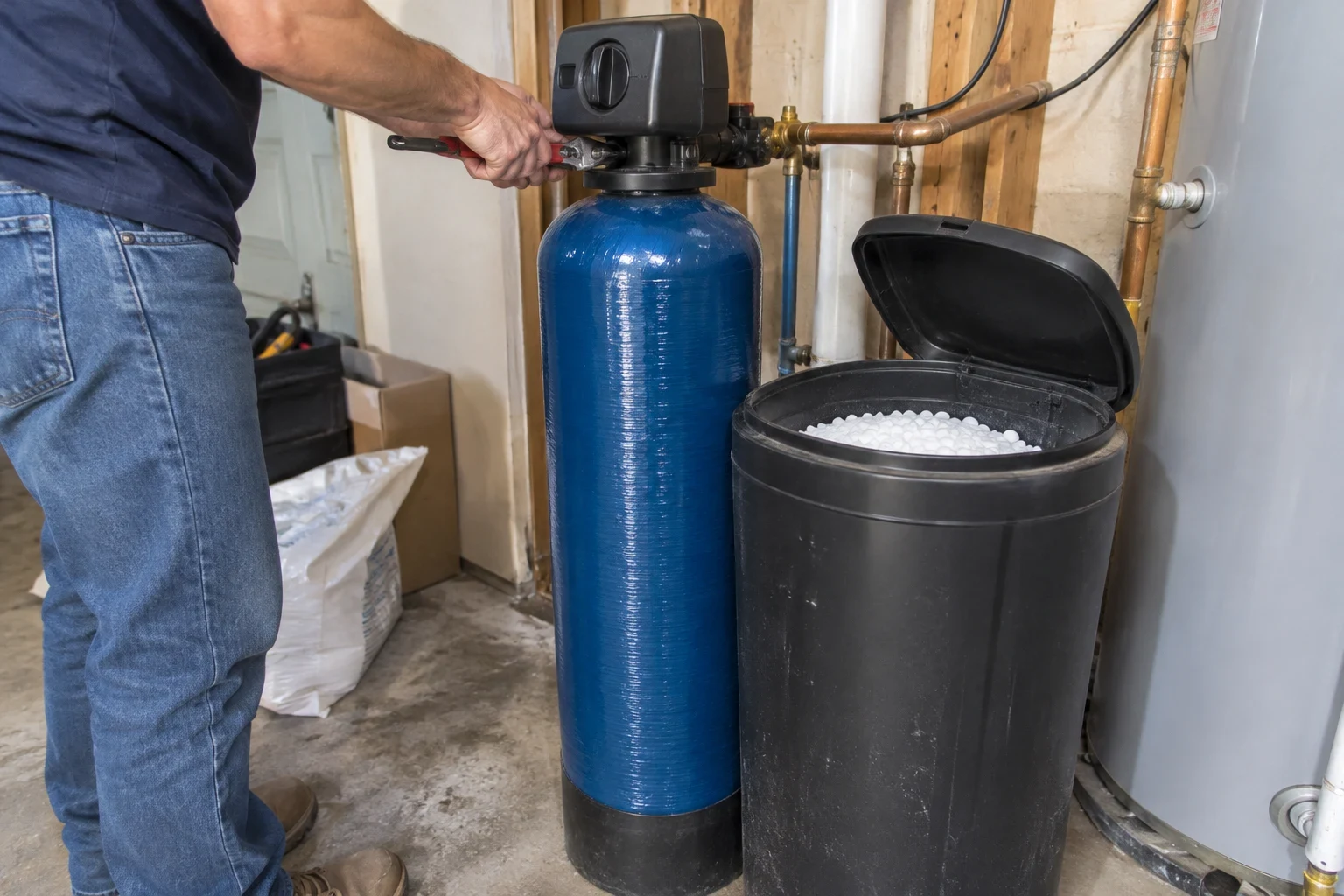
Hard minerals build up on shower heads, cloud your glassware and settle as scale in the bottom of the water heater. We pick a softener sized to your household, set it in neatly by the main line, and show you how the settings work before we pack up.
How a softener works and who needs one
Calcium and magnesium are the minerals behind hard water. Inside a softener, a tank of resin beads grabs them before the water moves on to your faucets, shower and appliances. Once they are out, soap lathers with less effort, dishes dry clear, and your water heater and dishwasher stop collecting crusty buildup.
A softener handles hardness and nothing else. If your complaint is a chlorine taste, an odor or worry about your drinking water, softening will not change it. For those, whole-home filtration or a reverse osmosis system at the kitchen sink is the better pick, and we can figure out which on the phone.
We do this work in your basement or utility room. Drop cloths go down first, we tell you before we shut the water off, and the space gets cleaned before we leave.
What the install includes
Sizing to your household
We ask how many people live in your home, how much water you use and what hardness you have seen on a water report or past reading. That sets the grain capacity, so the unit is not too small to keep up or bigger than you need.
Bypass and plumbing tie-in
We plumb the softener into your main line with a bypass valve. That lets you shut the softener out for repairs or for an outdoor spigot without cutting water to the house.
Drain line done right
The regeneration water has to go somewhere. We run the drain line to a floor drain or standpipe with a proper air gap so nothing can siphon back.
Brine tank setup and first fill
We set the brine tank, add the first load of salt and run a regeneration cycle so you can see it working.
Settings and a walk-through
We program the valve for your water and usage, then show you how to check salt, run a manual cycle and use the bypass.
Old unit removal and cleanup
If you have an old softener, we take it out and haul it away. Floors get wiped down and the drop cloths come up last.
Signs hard water is wearing on your home
- White crust that returns fast
- You scrub the faucets, shower head or glass door, and a rough white film is back within a few days.
- Spotty dishes
- Glasses come out of the dishwasher foggy or speckled, even with rinse aid in the machine.
- Lather that takes too much soap
- Shampoo and dish soap seem to vanish without foaming, so you keep pouring more. After a shower your skin can feel like it has a film on it.
- Popping from the water heater
- Rumbling or knocking in the tank usually means scale has settled on the bottom. Hot water may also be slower to show up at the tap.
- A softener that quit
- The salt level never drops, the unit never cycles, or the hard water signs are back. It may be one worn part or the whole unit, and we will tell you plainly which.
How install day goes
- 1
Quote by phone first
You call, we talk through what you are seeing and how your plumbing is laid out, and we give you a free quote. The quote holds for 30 days, so there is no rush.
- 2
Arrival and floor protection
We put down drop cloths along the path to your utility area and around the work spot. We tell you when we are about to shut off the water and about how long it will be off.
- 3
Plumbing, drain and power
We tie the softener into the main line with a bypass, run the drain line and plug the valve into a nearby outlet. Most installs are done within the day.
- 4
Startup and handoff
We fill the brine tank, run a cycle, check for leaks and set the valve. Then we show you the controls, clean up and take payment once the install is complete.
What sets the price of a softener install
Every basement and utility room is set up a little differently, so we price your job after we hear how your plumbing runs and how much water your household goes through. The quote breaks the work into separate lines so you can see where the money goes. Financing is offered through U.S. Bank Avvance, on approved credit, and we can cover that on the same call.
- Grain capacity
- A bigger family or harder water puts more minerals through the unit between cycles. Handling that takes a larger resin tank, which costs more than a small one.
- The route to your main line
- If your home already has a softener loop by the main, the hookup is short and simple. When we have to add pipe to reach a good spot, labor and material go up.
- Where the drain and outlet sit
- During regeneration the softener flushes water out, and the control valve runs on household power. If the closest floor drain or plug is far away, we either run a longer line or choose a spot closer to them.
- Taking out an old unit
- Unhooking an existing softener and hauling it off adds some time to install day.
- Pairing it with filtration
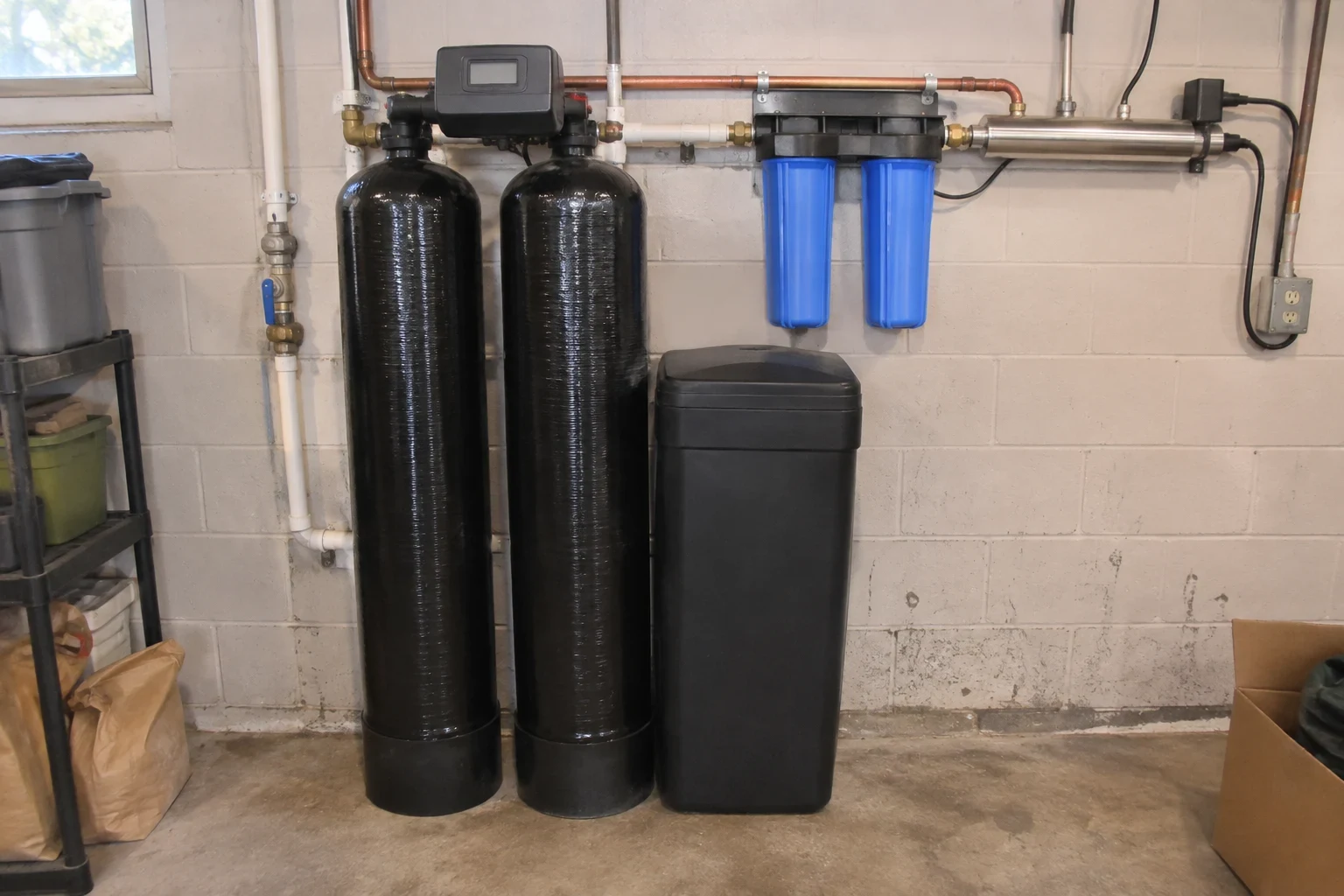
- Some homes add whole-home filtration or iron treatment along with the softener. Doing both on one visit means we only set up and protect the floors once.
Water softener questions
- Will a softener fix the taste of my water?
- No. A softener removes hardness minerals, not chlorine or odor. If taste is the problem, whole-home filtration or a reverse osmosis system for drinking water is the better fit. We can talk through both on the phone.
- What salt should I use, and how often do I add it?
- Most homes use plain softener salt pellets. Potassium chloride works too if you want to cut sodium, though it costs more. How often you refill depends on your usage, but we will show you how to check the level and you will get a feel for it in the first month or two.
- Can you replace the softener I already have?
- Yes. We disconnect the old unit, haul it away and install the new one on the same spot when the plumbing allows. If your old loop or bypass is in rough shape, we will tell you before we start.
- I am on a well. Is a softener enough?
- Sometimes. Well water can also carry iron, sulfur smell or sediment that a softener alone will not handle well. Our well water treatment page covers the setups we use, and we will ask about what you see so we recommend the right mix.
- When do I pay, and what if I change my mind?
- You pay in full when the install is complete. After you sign, you have three business days to cancel. Your quote holds for 30 days if you need time to think it over.
Ready to stop scrubbing scale?
Tell us about your home and what you are seeing. We will give you a free quote and answer any financing questions on the same call.